Let's Talk
Menu
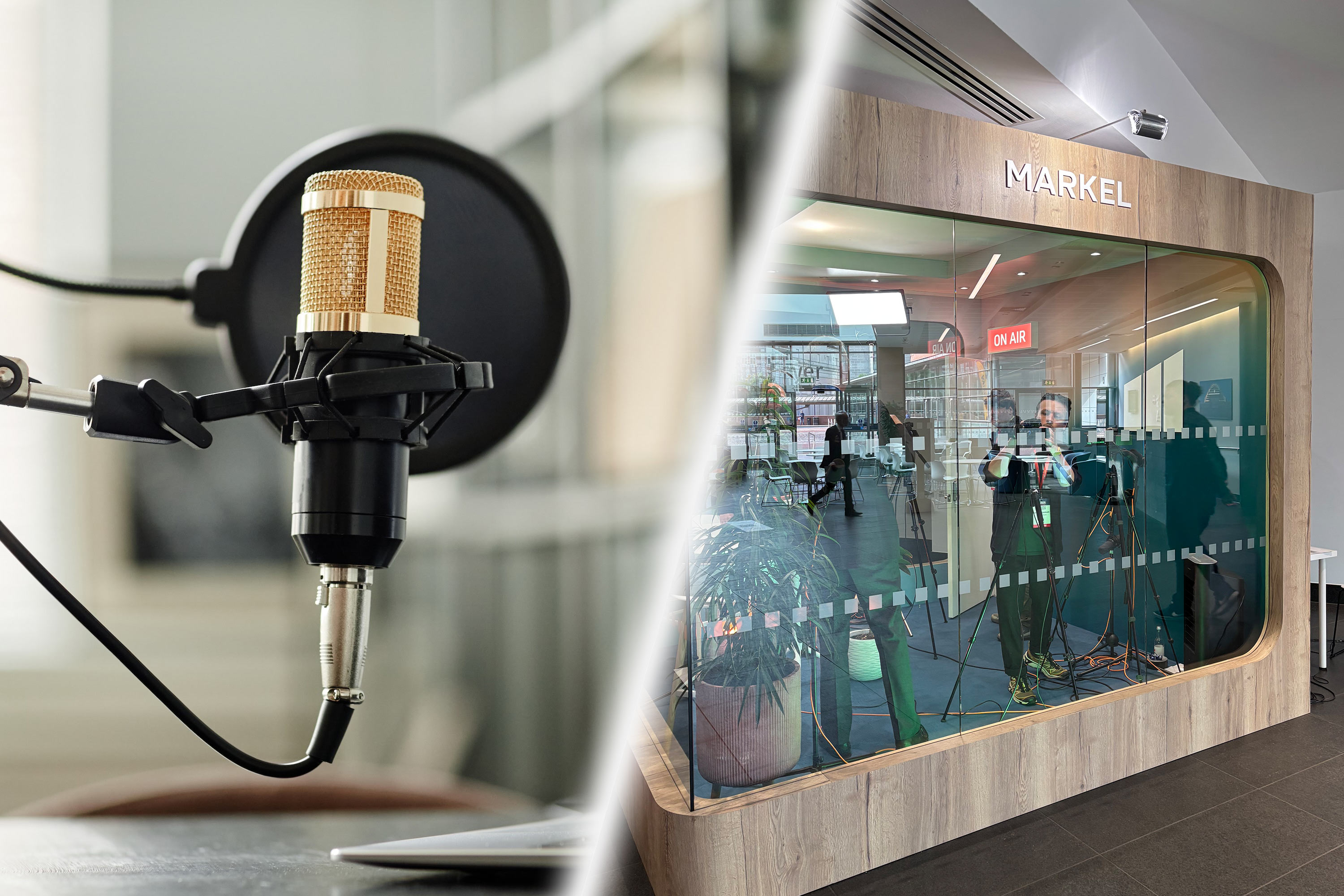



In the high-stakes world of B2B marketing, a podcast is no longer just a "nice-to-have" audio project. It is a strategic asset. However, before you buy your first microphone or hire a production partner, you face a fundamental fork in the road: should you record in a controlled studio, or should you take the show on the road?
The choice is not merely aesthetic. It is a business decision that impacts your ROI, your guest acquisition strategy, and your brand's authority. While a studio offers the gold standard of polish, on-location production acts as a content lab that can fuel your entire marketing department for months.
This guide is designed to help you self-qualify. By the end of this article, you will know exactly which format delivers the highest business value for your current goals.
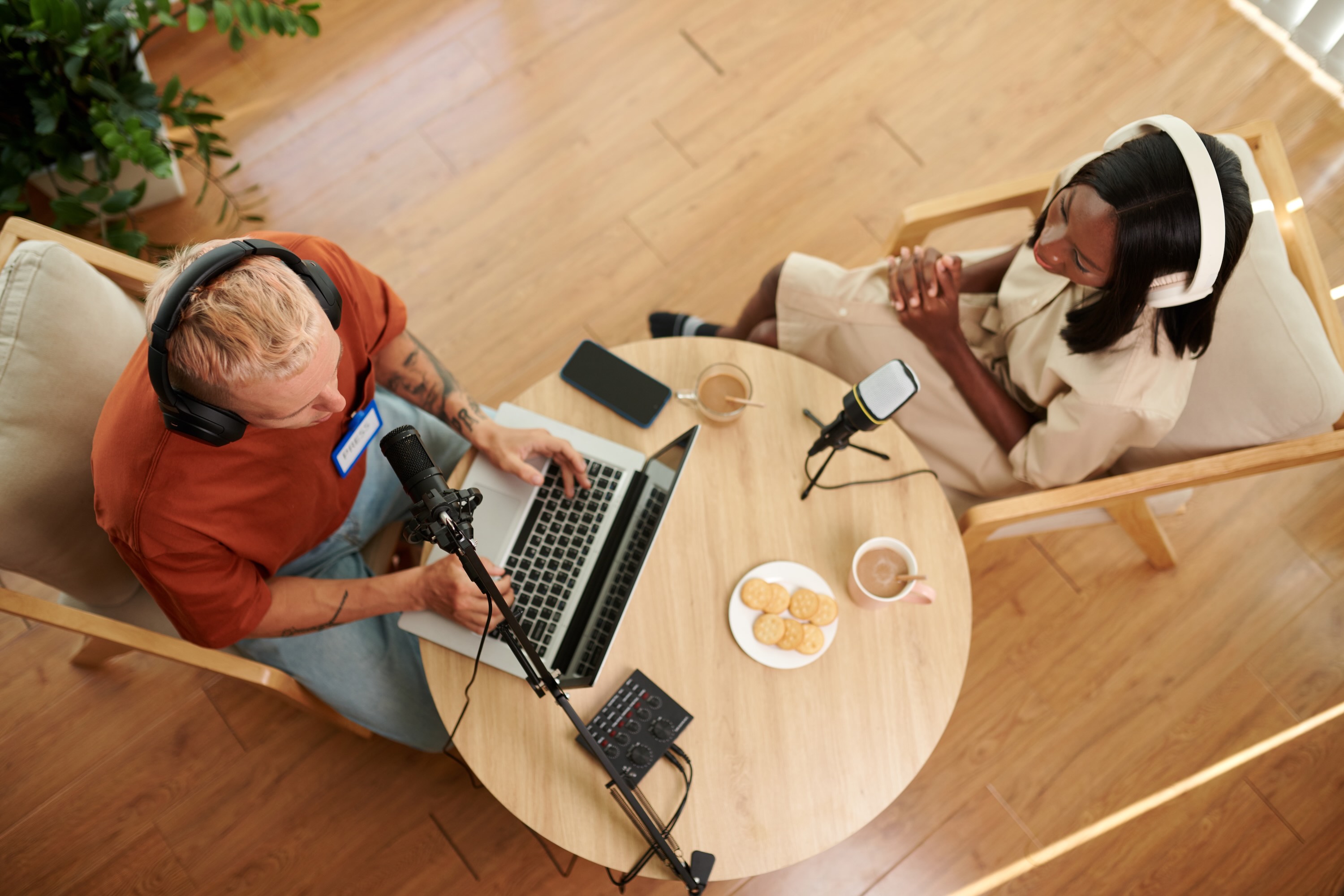
The studio is the traditional home of the podcast. It is a space designed for one thing: the perfect capture of human thought. For brands that prioritise evergreen authority and a highly polished brand image, the studio is the fortress of consistency.
In a studio, every variable is controlled. There are no sirens, or buzzing background sounds. Why does this matter for business? It comes down to cognitive ease.
When audio is crisp and free of distractions, the listener's brain has to do less work to process the information. This means your message (the core of your B2B value proposition) is absorbed more effectively. In a studio, we are not just fighting for good sound; we are fighting for the listener’s attention span.
For video podcasts, which are the only podcasts that truly move the needle in 2026, the studio provides a visual anchor. You can build a custom set that incorporates your brand’s hex colours, logos, and specific atmosphere.
Consistency is vital for long-term brand recognition. When a prospect sees a 30-second clip on LinkedIn, the background should immediately signal that they are watching your specific show. According to Social Media Today, consistent branding across video channels can increase revenue by up to 23 percent.
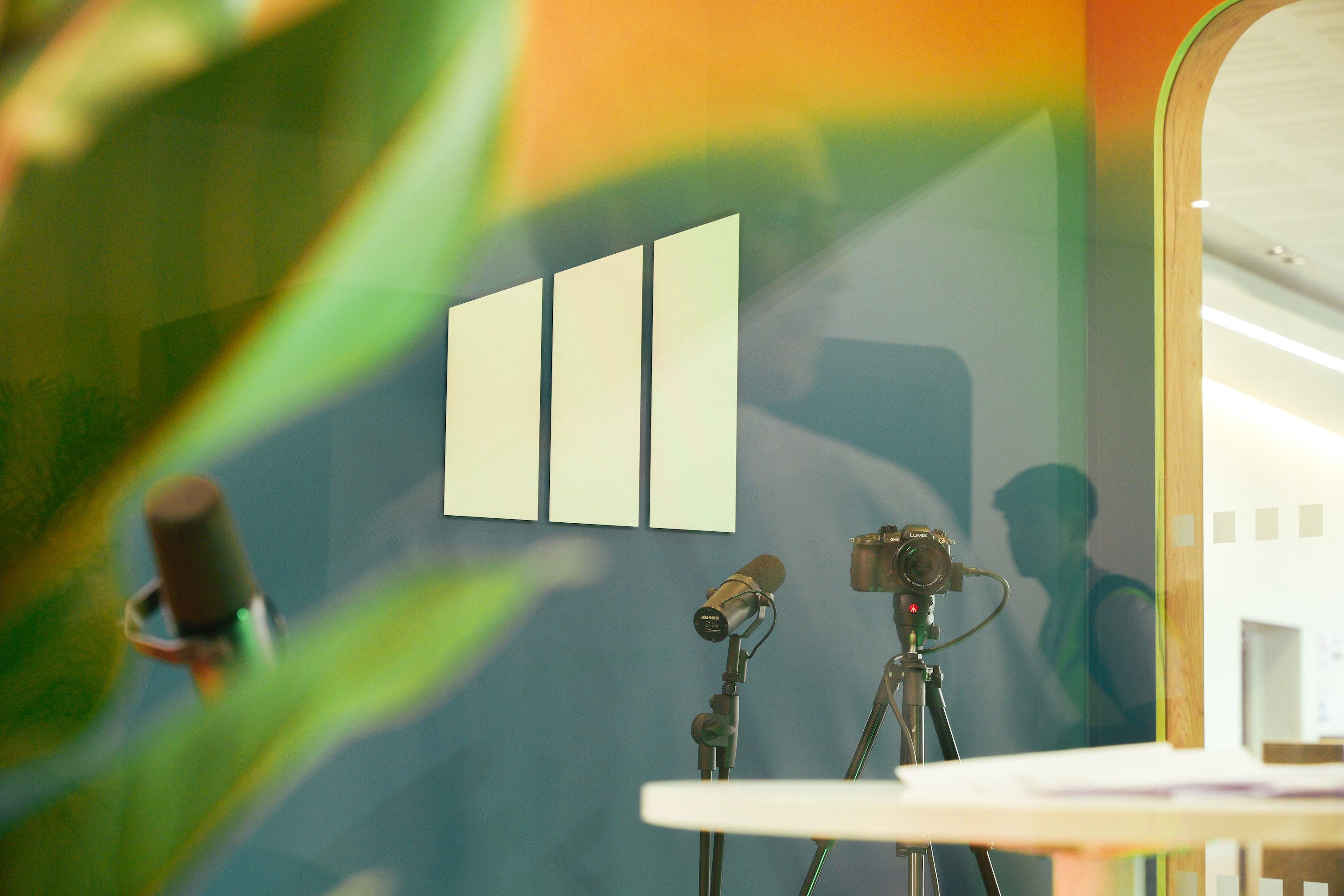
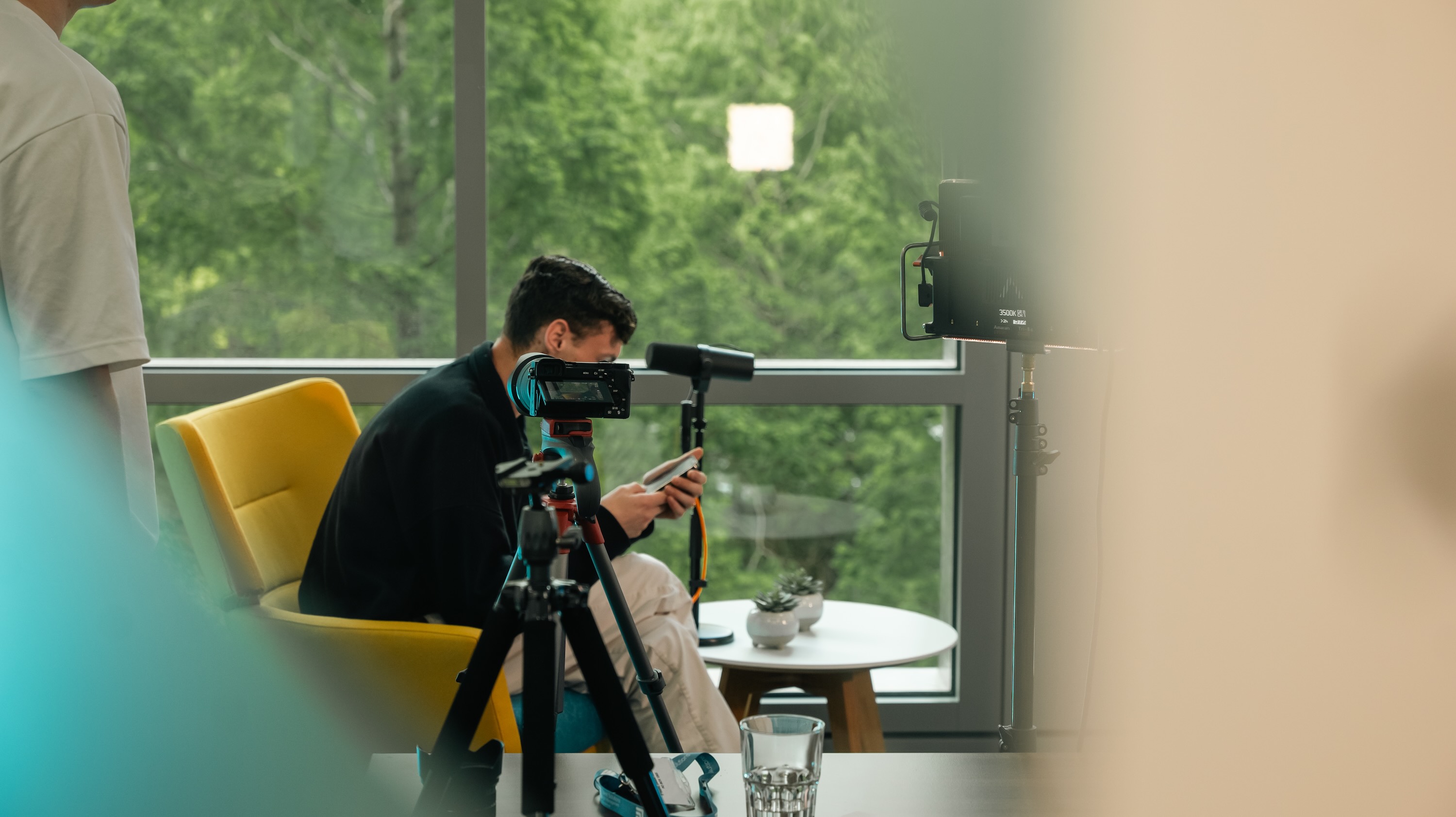
If the studio is a fortress, on-location production is an expedition. This involves taking a professional crew and studio-grade equipment to a trade show, a flagship conference, or your own corporate summit.
While the logistics are more complex, the business value is often exponentially higher due to what we call the energy multiplier.
There is a psychological shift that happens when you record on-location. The ambient buzz and the natural chemistry of two people meeting in person, plus the visual texture of a live event create a sense of urgency and relevance.
According to foundational research on nonverbal communication, over 50% of communication is non-verbal. In a studio, you capture the voice and the face. On-location, you capture the context. You are showing your audience that your brand is physically present where the industry’s biggest moves are being made.
This is perhaps the biggest business driver for on-location production. In a B2B environment, getting 30 minutes with a C-suite executive or an industry titan is notoriously difficult. On-location production allows you to batch-record elite guests who would otherwise be unreachable. It is the most effective way to scale your content through on-location podcasting during high-value periods.
We have spoken before about the Content Waterfall method. On-location recording is the ultimate source water for this waterfall.
When choosing between these formats, you must look at your ROI through three different lenses: financial, relational, and operational.
A studio session has a predictable cost. You pay for the hours and the editing. On-location has a higher upfront cost due to travel and setup. However, when you look at the cost-per-asset, on-location often wins.
Data from HubSpot’s Marketing Trends suggests that short-form video has the highest ROI of any social media strategy. If one day at a conference yields twenty social clips, your price-per-piece of content is significantly lower than booking four separate studio sessions over four months.
In B2B, the podcast is often a trojan horse for business development.
If your marketing team is struggling to keep up with the demand for LinkedIn content, on-location is your saviour. It acts as a content lab where spontaneous insights are captured. You cannot script the excitement of an industry-changing announcement at a trade show. That authenticity is what drives engagement.
To help you decide, walk through these four qualifying scenarios.
Your goal is to become the encyclopaedia of your niche.
You have a booth, your sales team is there, and most of your target clients are in the same building.
The goal is internal alignment and high-level strategy sharing for employees.
You want to be the ones interviewing the celebrities and the CEOs. You want your LinkedIn feed to look like a high-budget news network.
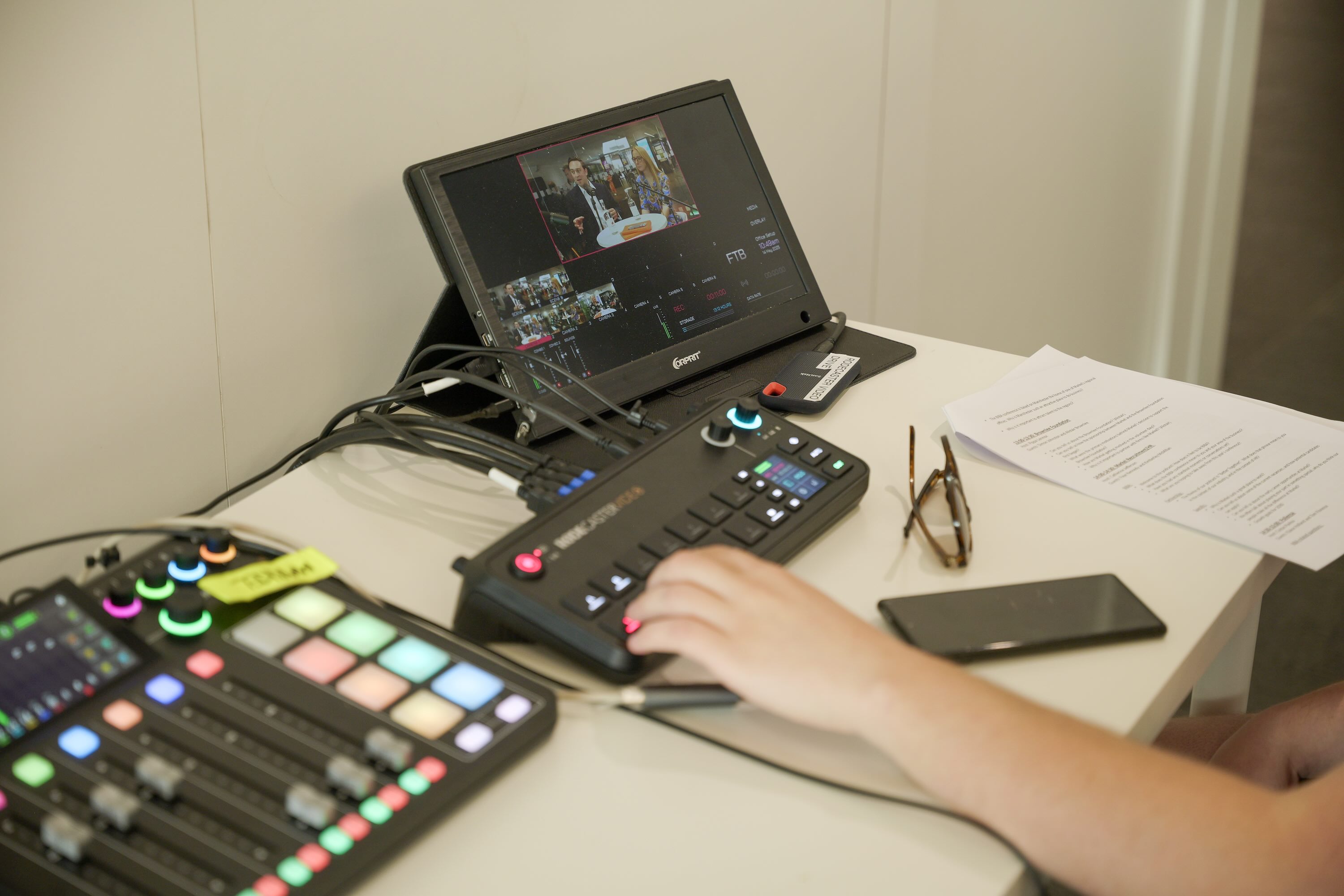
The number one reason brands avoid on-location recording is the fear of bad sound. At Cue, we have solved this atmosphere gap through specific technical interventions.
These are laser-focused microphones that only pick up what is directly in front of them. They effectively mute the event noise around the speakers.
We utilise 2026-grade neural networks to isolate voices and remove unwanted frequencies. This ensures that the final product sounds like it was recorded in a quiet room, even if it was actually recorded next to a busy catering station.
Whether you choose the quiet focus of the studio or the synergy of the trade show floor, the goal remains the same: deliver value to your audience and ROI to your business.
Don't let your business podcast sound like a hobby practice. Treat it like the multi-channel content engine it is.
At Cue, we provide the gear AND the strategy. We help you choose the right format for the right goal, and then we execute the content waterfall so that your single day of production works for you for the next ninety days.
Are you ready to turn your next business event into a content powerhouse? Explore our on-location conference podcasting services and Book a call with us today.


Join our carefully curated newsletter packed with insights, tips and resources to help shape and share your stories.