Let's Talk
Menu




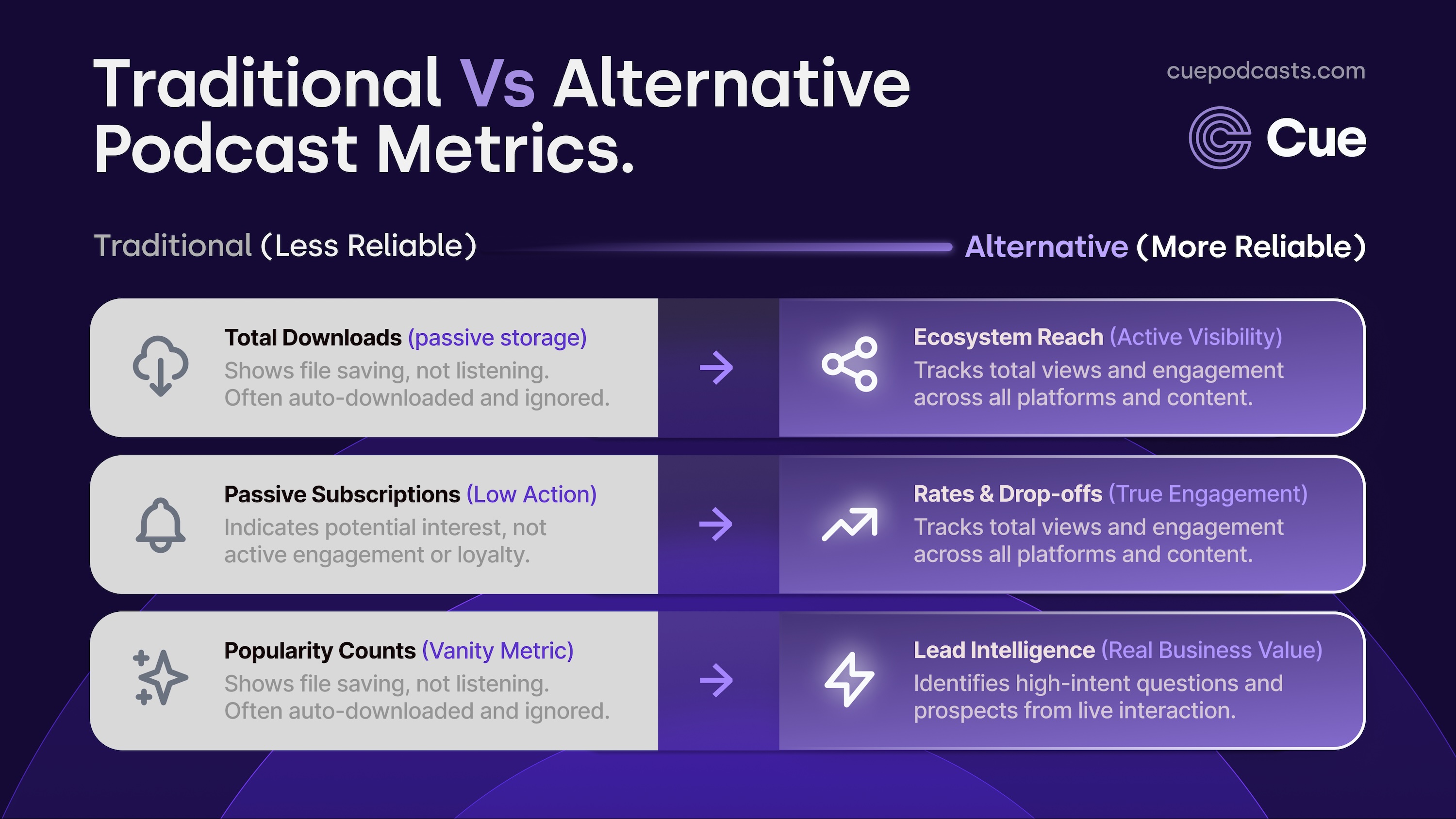
It’s all too easy to fall into the trap of judging podcast success by popularity. High download numbers are often seen as the marker of high-performing content, but they actually aren’t the most accurate metric to rely on.
What if we told you that 13% of podcast downloads are never listened to? Many platforms often auto-download podcast episodes based on user activity, and yet, the listener may never press play.
Because of this, podcasts built for smaller, high-value audiences, such as B2B, private, or niche shows, are often underserved by traditional success metrics like downloads. A smaller audience that actively listens, comes back, and genuinely connects with the message is far more valuable than a high download count with little real engagement.
Live shows let listeners get one step closer. They transform from passive listeners to active participants, able to interact in real time. An included audience is an engaged one, and questions, reactions, and comments can shape episode direction and conversations.
Live broadcasting shifts podcasting from a one-way broadcast into a two-way community event - which is the nature of podcasting. Providing insight and prompting discussion is what sets podcasting apart from other marketing channels - your community becomes your greatest strength.
For businesses, the value of live podcasting is clear: it can provide more accurate lead intelligence, more efficient and relatable content, and a sense of brand intimacy that can’t be replicated elsewhere.

While downloads can indicate potential exposure, they are not representative of an engaged audience. A high download count often just means that an episode is stored on a device, and not that anyone has actually listened to it.
Real-time audio builds community through conversation, participation, and return engagement. Success is better measured by an audience that listens, connects, and comes back, rather than total downloads alone.
Take The Rest Is History podcast, hosted by Tom Holland and Dominic Sandbrook. Amassing an army of loyal and engaged listeners, the podcast has gone global, hosting live shows and recordings that regularly sell out. These events encourage community interaction and shared experiences among the audience.
This level of impact cannot be captured through download numbers. Live broadcasts and recordings highlight how engagement-based metrics provide a more accurate (and more useful) idea of a podcast’s success.
So, if not download numbers, what metrics should you be using to track and measure your podcast’s impact?

Repurposing allows you to adapt podcast content for different platforms, helping to not only reach different audiences but also extend its shelf life and reinforce expertise. Instead of judging your podcast’s impact by episode downloads alone, start measuring the performance of the wider content ecosystem that your podcast creates.
A single podcast episode can be repurposed into multiple pieces of content: short social clips, LinkedIn carousels, blog posts, and email newsletters. Strategic repurposing helps your content go further, reach new people, and build a recognisable brand presence.
To track this effectively, focus on repurposed content performance, rather than evaluating individual episodes:

Podcasting has shown itself to be an effective content and marketing strategy. When used live and interactively, podcasting can also become a useful source of sales intelligence.
Live sessions allow brands to see who is in the room - from high-value prospects to key accounts and existing industry thought leaders. This visibility makes it easier to identify and prioritise relationships and opportunities.
Audiences consume, but communities participate. Live Q&As and webinars show engagement and intent, and highlight real challenges. Questions people ask during a live show can help reveal more than passive podcast analytics ever could - highlighting sales leads, content gaps, and real-world problems.
In this way, live podcasting can become a catalyst for human connection outside of the show. Community spaces build loyalty and trust and act as a networking tool, bringing people with shared interests and goals together in a relationship-driven environment.

Private and internal podcasts are not made for public consumption, so impact can look different. These shows play a significant role in improving employee engagement, communication, and wellbeing.
Employers can track internal podcast success using metrics such as:
Beyond analytics, qualitative feedback is also important. Surveys, questionnaires , and real-time engagement during live internal broadcasts can guide and develop company content.

Internal podcasts strengthen interdepartmental connection and communication, encouraging collaboration across the workforce. The conversational format of podcasting helps staff feel heard, informed, and connected, later contributing to improved employee retention and satisfaction.
Brand recall is the ability to recognise or remember a brand, its content, product, or service after hearing it mentioned or advertised. Longform audio strategies have a better chance of excelling in this area due to its immersive and engaging nature, and the trust built between hosts and listeners.
Podcast adverts have been shown to generate 4.4x higher brand recall than other forms of digital advertising. In a Nielsen study, 62% of listeners successfully recalled brands advertised on podcasts, while 60% reported increased brand awareness from ads heard during podcast episodes. This engagement is far higher than passive scrolling or fleeting social ads.
The “Halo Effect” is when a positive experience influences long-term perception of a brand. Podcast hosts often establish strong, trusting relationships with their audiences over time, and this trust and loyalty attaches to the brands and messages associated with them.
A good example is the Shopify Masters podcast. Through incorporating live recordings at events and conferences, often including audience Q&As. Seeing founders and leaders in-person and on stage, and hearing informal, unscripted answers highlights Shopify as a genuine voice and partner to entrepreneurs. Deep connections and trust that is built up in the room transfers over to the brand, improving Shopify’s overall image.

Live podcast interactions deepen this effect. When audiences get involved through Q&As and discussions, they transform from passive consumers to active participants. This sense of “being there” creates an emotional connection and keeps the brand memorable.
Take the viral Saving Grace podcast as an example. Host GK Barry actively encourages audience participation, dedicating a large segment of her live shows to solving audience dilemmas and giving advice. This makes each event unique, amplifies direct-to-host interactions, and underscores live podcasting as a community-led, shared experience, not a one-way broadcast.
Live podcasting reshapes your audience - transforming listeners from passive consumers into active participants. By measuring engagement through metrics like listener retention, completion rates, and drop-off points, instead of relying solely on download numbers alone, brands can unlock deeper, more accurate insights, adapt content in real-time, and build stronger audience connections.
Create a podcast your listeners will show up for, and not simply subscribe to. Book a call with Cue today to explore your podcast’s full potential.


Join our carefully curated newsletter packed with insights, tips and resources to help shape and share your stories.